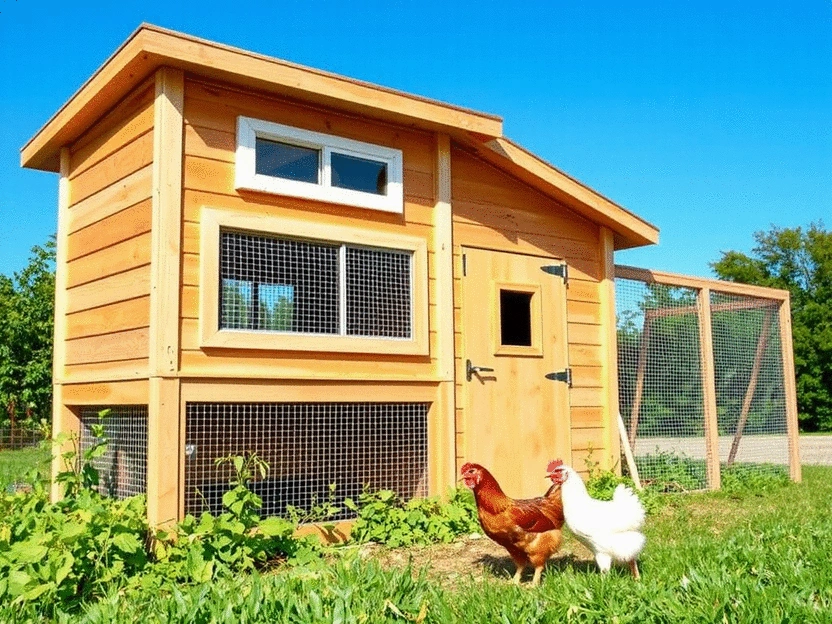
Passive Ventilation
- Cost: Low
- Coverage: Varies depending on design
- Pros: Simple, no energy needed, natural airflow
- Cons: May not be as effective in extreme weather, less control
- Examples: Gable vents, roof gaps, cross-ventilation
Welcome to American Chicken Coops, your trusted resource for happy, healthy backyard chickens!
Mar 21
What if the secret to happier chickens lies in something as simple as airflow? Proper ventilation in your chicken coop can transform the health and productivity of your flock. Let’s dive into the essentials of keeping your coop well-ventilated!
This comparison highlights key differences between passive and active ventilation techniques for chicken coops. For those just starting out, understanding these basics can be a great first step, much like reading a beginner's guide to chicken coops.
As any backyard chicken keeper will tell you, proper ventilation in your chicken coop is crucial for the health and happiness of your flock. It affects ammonia levels, humidity control, and overall air quality. When we think about the comfort of our chickens, we often focus on cozy nesting boxes and spacious runs, but ventilation is just as important, if not more so!
Having adequate airflow in your coop helps to maintain a healthy environment, reducing the buildup of harmful gases and unpleasant odors. Without proper ventilation, ammonia can accumulate from droppings, leading to respiratory issues for your chickens. It's vital to understand how proper airflow contributes to a thriving chicken coop!
In my experience over the years, I’ve seen firsthand how a well-ventilated coop can change the dynamics of a flock. Chickens thrive in environments where air flows freely, allowing them to stay comfortable and safe from illness. If you're ever in doubt, just take a look at your chickens; they’ll tell you how they feel about their living space!
Identifying ventilation problems in your coop is critical for maintaining a healthy flock. Common issues include moisture buildup, dust, and pathogen proliferation caused by inadequate airflow. These can lead to a stressed and unhealthy environment for your birds.
Inadequate ventilation often results in too much moisture, attracting pests and creating the perfect breeding ground for diseases. Regularly checking your coop for these problems can save you a lot of headaches down the road. This proactive approach is just as important as choosing the right bedding materials for chicken coops.
When air quality suffers, so does the health of your chickens. Ensuring that your coop is well ventilated can lead to improved respiratory health and overall well-being for your flock. Remember, happy chickens lay better eggs!
Improving air quality in your chicken coop doesn’t have to be overwhelming. There are several effective methods you can use to ensure your flock remains healthy and happy!
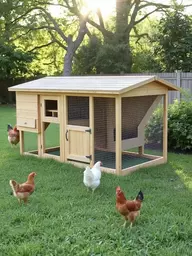
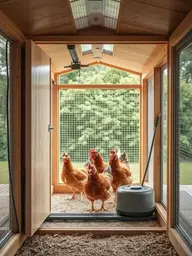
Passive ventilation relies on natural airflow to keep your coop comfortable. This can include methods like gable vents, roof gaps, and cross-ventilation strategies. Each of these options allows fresh air to circulate without the need for electrical systems.
When I built my first coop, I relied heavily on passive ventilation techniques, and they worked wonders! It’s amazing how simple design changes can have such a big impact on air quality.
When planning passive ventilation, it’s essential to size your vents correctly. A good rule of thumb is to provide 1 square foot of ventilation per chicken or per 50 square feet of floor space. This will ensure a steady flow of fresh air without creating drafts that could stress your birds.
For those looking to take their ventilation to the next level, active solutions like solar fans and turbines can significantly enhance airflow. These systems can help reduce humidity levels and ensure that your coop maintains a comfortable environment, especially during hot summer months.
Incorporating these methods can make a significant difference in maintaining the right conditions for your chickens throughout the year.
| Method | Cost | Coverage | Pros | Cons |
|---|---|---|---|---|
| Passive Ventilation | Low | Varies | Simple, no energy needed | May not be as effective in extreme weather |
| Active Ventilation | Higher | Effective coverage | Consistent airflow, adjustable | Requires power source |
This table summarizes the different aspects of both methods, helping you decide which might be best for your situation. Whether it’s passive or active, what’s important is finding the right balance for your coop! Consider these ventilation strategies when looking at DIY chicken coop plans for 6 chickens.
Don't overlook how your coop's design can influence airflow and air quality. Strategic placement of vents and openings can enhance natural ventilation, while also ensuring your chickens feel safe and secure.
Consider the direction of prevailing winds, sunlight exposure, and the overall layout of your coop. By being thoughtful about these elements, you can create a more comfortable environment for your feathered friends!
To enhance ventilation in your chicken coop, consider using a combination of both passive and active methods. For instance, install gable vents for natural airflow while adding a solar fan to ensure consistent circulation during peak heat. This hybrid approach will keep your flock comfortable and healthy year-round!
Keeping your chicken coop well-ventilated is essential for your flock’s health! As a lifelong backyard chicken keeper, I've seen firsthand how proper ventilation can make a big difference. Here, I’ll share some best practices to ensure you maintain optimal airflow in your coop.
One of the best ways to ensure your chicken coop ventilation is working effectively is through regular checks. Here are some key steps to consider:
By performing these routine checks, you can catch potential problems early and maintain a healthy environment for your birds. Don't forget, a little maintenance goes a long way toward keeping your coop cozy and safe!
Another effective way to improve air quality in your chicken coop is by using organic additives. One standout is zeolite, a natural mineral that can absorb moisture and odors. Here are some benefits of incorporating zeolite into your coop:
Adding organic materials like zeolite not only enhances air quality but also supports a more sustainable approach to chicken keeping. Your flock will appreciate the cleaner air, and you’ll likely notice a drop in respiratory issues!
It’s important to evaluate how well your ventilation system is performing. Understanding your coop's air exchange rate helps ensure that fresh air is consistently circulating. Here are a few tips to help you monitor performance:
By keeping an eye on these indicators, you can make adjustments as needed. Remember, maintaining proper airflow is key to keeping your chickens happy and healthy!
Proper ventilation is crucial for preventing the buildup of harmful ammonia from droppings, regulating humidity levels, and ensuring overall good air quality. This helps safeguard your chickens' respiratory health and prevents diseases.
Passive ventilation relies on natural airflow through elements like gable vents and roof gaps, offering low cost and no energy use but with less control. Active ventilation uses powered systems like solar fans or turbines for consistent, adjustable airflow, providing better humidity control but at a higher cost and requiring a power source.
A good rule of thumb for passive ventilation is to provide 1 square foot of ventilation per chicken or per 50 square feet of floor space. This ensures adequate fresh air circulation without creating drafts.
Signs of poor ventilation include a strong ammonia smell, excessive moisture buildup, mold growth, increased dust, and chickens showing signs of respiratory issues or stress.
Yes, organic additives like zeolite can significantly improve air quality. Zeolite, for example, absorbs moisture and odors, effectively controlling ammonia levels and promoting healthier bedding conditions.
Here is a quick recap of the important points discussed in the article:
Passionate chicken keeper. Homesteading enthusiast. Advocate for sustainable living.
Harold 'Hank' Dawson is dedicated to helping U.S. backyard chicken keepers create safe and practical housing solutions, empowering beginners, homesteaders, and suburban homeowners to embrace a joyful chicken-keeping lifestyle. Join her on American Chicken Coops for reliable resources and tailored strategies that simplify your coop building and maintenance and enhance your flock's well-being.
Passionate chicken keeper. Homesteading enthusiast. Advocate for sustainable living.
Harold 'Hank' Dawson is dedicated to transforming backyards across the U.S. into thriving, safe havens for chickens, empowering fellow chicken enthusiasts to embrace a sustainable and rewarding poultry-keeping lifestyle. Join her on American Chicken Coops for daily tips and tailored strategies that simplify your coop building and maintenance and enhance the well-being of your flock.