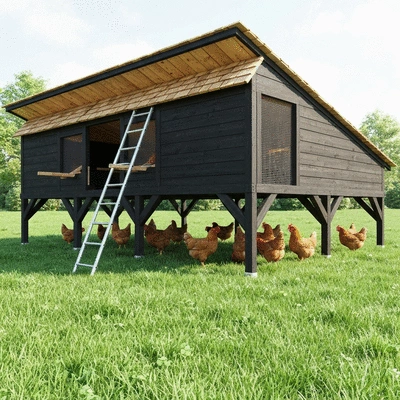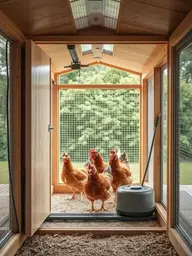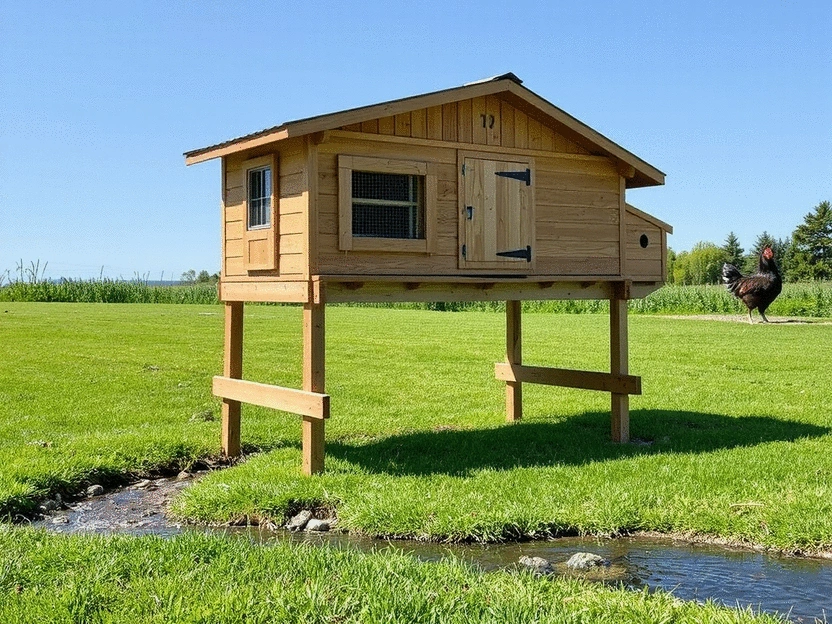
Why Elevation Matters: Benefits of an Elevated Coop
- ⬆️ Protects from flooding
- 💧 Prevents moisture-related diseases
- 🦊 Reduces predator access
- 🌬️ Enhances ventilation
Welcome to American Chicken Coops, your trusted resource for happy, healthy backyard chickens!
Apr 16
Curious about how to protect your chickens from unpredictable weather? Understanding the significance of an elevated chicken coop in flood-prone areas could be the key to ensuring your flock's safety and health. Here are some essential insights that every chicken keeper should know.
An elevated chicken coop offers crucial protection against common flood risks and enhances chicken well-being. The visual below highlights these benefits and features, helping you design a predator-proof chicken coop that is also flood-resistant.
When it comes to keeping chickens, especially in areas prone to flooding, understanding the importance of an elevated chicken coop is key. Floodwaters can pose serious risks to your flock, but a well-designed elevated coop can provide a safe haven for your feathered friends. Let’s dive into why elevation matters, the common risks associated with flooding, and the features that make elevated coops resilient.
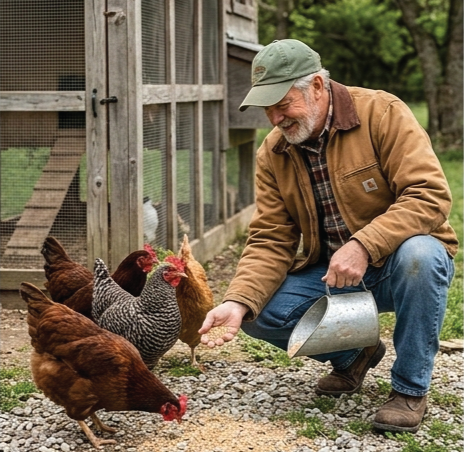
As a lifelong chicken keeper, I’ve learned firsthand the importance of ensuring a safe environment for my birds, especially during rainy seasons. An elevated coop not only keeps your chickens dry but also minimizes the risk of predators that may take advantage of a flooded backyard. By planning for these challenges, you can enjoy peace of mind knowing your chickens are protected.
Elevating your chicken coop provides multiple layers of protection. First and foremost, it keeps your chickens above potential floodwaters, reducing the risk of drowning or exposure to dangerous bacteria. Moreover, elevation ensures proper ventilation, which helps prevent moisture buildup that could lead to health issues.
With these benefits in mind, building an elevated coop is a practical choice for anyone serious about their flock's well-being. It’s a simple yet effective way to ensure they thrive, even in challenging conditions. You can find more simple chicken coop plans for beginners to get started.
In flood-prone areas, several risks can threaten your chickens, including rising water levels, strong currents, and the potential for debris to damage your coop. Floodwaters can carry harmful pathogens that pose health risks to your chickens. If you're unaware of these dangers, you may find yourself in a precarious situation when storms hit.
Here’s a quick rundown of common flood risks you should consider:
Recognizing these threats can help you take preventative measures, ensuring your coop stands strong even when Mother Nature throws a tantrum. Remember, it’s always better to be prepared than to react after the fact!
Building an elevated chicken coop is more than just lifting it off the ground; it involves incorporating specific features that enhance its flood resilience. For instance, using materials that can withstand moisture, such as pressure-treated lumber, helps prolong the life of your coop.
By integrating these flood-resistant features into your coop design, you can create a safe and dry environment for your chickens, no matter how heavy the rains may fall. I’ve seen firsthand how a solid, well-thought-out coop can make all the difference during a storm!
As you think about building your elevated chicken coop, we want to hear from you! What feature are you most excited to incorporate into your design?
Creating your own elevated chicken coop can be an exciting adventure! With the right resources and plans, you can build a safe haven for your feathered friends that stands strong against the elements. Let's explore where to find these invaluable materials and how they can help you on your coop-building journey.
When you're ready to dive into your coop project, having the right guides is essential. Whether you're a seasoned builder or a first-time DIYer, there are plenty of resources available to help you along the way. Here are some great places to start:
Utilizing these resources will empower you to make informed decisions while ensuring your elevated chicken coop is both functional and stylish!
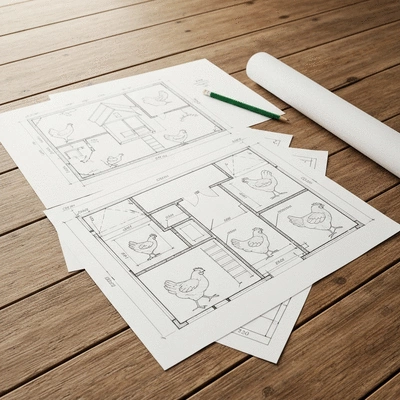
One of the best investments you can make is acquiring downloadable blueprints tailored to your needs. These blueprints provide clear instructions and dimensions, making the building process smoother. Additionally, they often come with cost breakdown resources to help you estimate your project’s budget effectively.
For instance, you might find blueprints that not only outline the coop's structure but also detail how much lumber, hardware, and insulation you'll need. Having this information at your fingertips makes planning much easier—trust me, it’s a game changer! This can be especially helpful when considering chicken coop plans with run integrations.
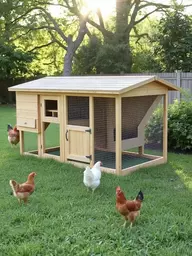
If you're just starting out and feel overwhelmed by the thought of building from scratch, consider looking into DIY chicken coop kits. These kits come with pre-cut materials and everything you need to assemble your coop efficiently. They often include:
Using a DIY kit not only simplifies the construction process but also provides you with a solid foundation to build upon. As you gain confidence, you can even modify or expand your coop in the future!
As we wrap up, I want to take a moment to encourage you! Building a flood-resistant chicken coop is a worthwhile endeavor that not only protects your flock but also enhances your backyard experience. Don’t hesitate to embark on this DIY project!
Remember, every expert was once a beginner. Take your time planning and building your coop, and don’t be afraid to ask for help. Whether you’re leaning on friends or reaching out to your local chicken-keeping community, support is just a message away!
Joining a community of chicken enthusiasts can provide you with a treasure trove of knowledge and encouragement. Engaging with others who share your passion can help you overcome challenges and inspire fresh ideas. Consider attending local workshops or connecting with others online through forums and social media. This can also help you explore charming chicken coop ideas for flocks of all sizes.
Lastly, as you dive into your elevated coop project, consider incorporating sustainable practices. From using recycled materials to creating a rainwater harvesting system, there are numerous ways to make your coop eco-friendly. Not only will you be helping the planet, but you’ll also be setting a great example for others in your community!
A: An elevated chicken coop is crucial in flood-prone areas because it keeps your chickens above floodwaters, protecting them from drowning, exposure to harmful bacteria, and reducing predator access. It also improves ventilation, preventing moisture-related health issues.
A: The main benefits include protection from flooding, prevention of moisture-related diseases, reduced predator access, and enhanced ventilation for a healthier environment for your flock.
A: Common flood risks include contaminated water sources, structural damage to the coop, increased access for predators due to high water, and heightened stress levels for the chickens.
A: Essential flood-resistant features include elevated platforms (to raise the coop above high water marks), effective drainage systems, water-resistant materials (like pressure-treated lumber), and secure anchoring methods to withstand strong winds and currents.
A: You can find resources such as free downloadable blueprints, cost breakdown guides, and online community forums dedicated to chicken keeping. DIY chicken coop kits are also a convenient option for beginners.
Here is a quick recap of the important points discussed in the article:
Passionate chicken keeper. Homesteading enthusiast. Advocate for sustainable living.
Harold 'Hank' Dawson is dedicated to helping U.S. backyard chicken keepers create safe and practical housing solutions, empowering beginners, homesteaders, and suburban homeowners to embrace a joyful chicken-keeping lifestyle. Join her on American Chicken Coops for reliable resources and tailored strategies that simplify your coop building and maintenance and enhance your flock's well-being.
Passionate chicken keeper. Homesteading enthusiast. Advocate for sustainable living.
Harold 'Hank' Dawson is dedicated to transforming backyards across the U.S. into thriving, safe havens for chickens, empowering fellow chicken enthusiasts to embrace a sustainable and rewarding poultry-keeping lifestyle. Join her on American Chicken Coops for daily tips and tailored strategies that simplify your coop building and maintenance and enhance the well-being of your flock.