Key Characteristics
Sand Bedding
- Excellent drainage
- Easy to clean (spot cleaning)
- Doesn't harbor pests
- Non-toxic & lasts longer
- Low bacteria growth risk
Welcome to American Chicken Coops, your trusted resource for happy, healthy backyard chickens!
Jul 26
Choosing the right bedding for your chickens is more than just a preference—it's crucial for their health and comfort. As you navigate through the options, consider these key insights that can guide your decision-making process.
This comparison highlights the key differences, cost-effectiveness, and environmental impact of sand versus wood shavings as chicken coop bedding. For a more detailed look at various bedding types, explore our guide on bedding materials for chicken coops.
When it comes to keeping our feathered friends happy, one of the most important decisions involves choosing the right bedding material for their coop. As a lifelong backyard chicken keeper, I’ve often found myself weighing the pros and cons of two popular options: sand and wood shavings. Each has its unique characteristics that can impact your chickens’ health and comfort. So, let’s dig into the details!
Understanding the key differences will help you make an informed decision, ensuring your coop is as comfortable as possible for your flock!
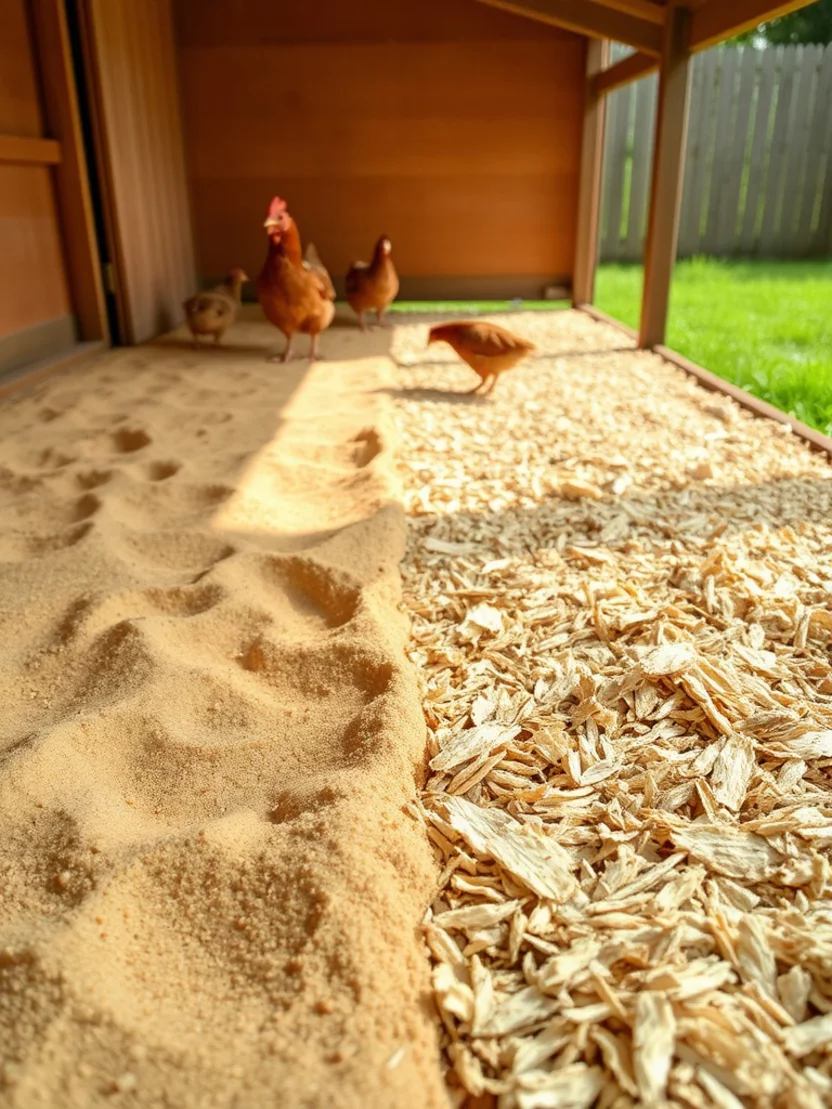
The choice between sand and wood shavings ultimately boils down to their specific features. For instance, sand is great for drainage and reduces the likelihood of bacteria growth compared to wood shavings, which can retain moisture if not managed properly. This can lead to unpleasant odors and potential health issues for your chickens. To learn more about maintaining a clean environment, check out our guide on cleaning your chicken coop.
In my experience, both options can work well, but knowing their strengths can help you tailor your coop setup to better suit your needs!
Choosing the right bedding is more than just a matter of preference; it can significantly impact your chickens’ health and well-being. Good bedding helps control odors and moisture levels, which in turn contributes to a happier, healthier flock. Happy chickens lay better eggs! Having worked with many backyard chicken keepers, I can attest that the right bedding can lead to noticeable improvements in chicken behavior and egg production.
Investing time in finding the right bedding will pay off with a stronger, more productive flock!
When considering bedding options, cost and environmental impact are crucial factors. Sand often appears to have a higher upfront cost, but its durability makes it a cost-effective choice over time. On the other hand, wood shavings are typically less expensive initially, but you’ll find yourself replenishing them more frequently. Let’s take a closer look at the comparison:
| Bedding Type | Initial Cost | Longevity | Environmental Impact |
|---|---|---|---|
| Sand | Higher | Long-lasting | Minimal |
| Wood Shavings | Lower | Shorter | Higher (requires more frequent disposal) |
As you can see, making the right choice can not only benefit your chickens but also your wallet and the environment. When weighing your options, consider what works best for your specific situation!
We'd love to know what bedding you prefer for your chickens! Which option do you find works best for your flock?
When it comes to choosing bedding for your chicken coop, understanding the pros and cons of each option is crucial. Both sand and wood shavings have their unique benefits and challenges. Let's break it down in a way that makes the decision easier for you!
In summary, if you're looking for a low-maintenance option that keeps your coop clean and dry, sand may be your best bet. However, if you prefer something that offers a softer landing for your hens and has an appealing natural look, wood shavings could be the way to go!
As I reflect on my own experiences with chicken coops, I find that moisture management, cleanliness, and maintenance are the three pillars to consider when selecting bedding. Here’s a quick recap:
These insights can guide you in choosing the best bedding for your unique setup and preferences, allowing your chickens to thrive!
In closing, the bedding you choose for your coop plays a significant role in your flock's overall health and happiness. Each option has its strengths and weaknesses, and what works for one chicken keeper might not be the best choice for another. I always encourage folks to consider their specific needs—from climate to coop design—before making a decision. For more ideas on coop setups, explore charming chicken coop ideas for flocks.
Don't hesitate to experiment! Sometimes it takes a little trial and error to find the perfect fit for your flock. Remember, the ultimate goal is to create a safe and comfortable home for your chickens, ensuring they live happy and productive lives!
Sand offers excellent drainage, is easy to spot clean, doesn't harbor pests, is non-toxic, lasts longer, and has a low risk of bacterial growth.
Wood shavings provide warmth and insulation, absorb moisture well, offer a more natural feel for chickens, and can be composted.
While sand has a higher initial cost, its longevity and low maintenance requirements often make it more cost-effective over time compared to wood shavings, which need more frequent replenishing.
Proper bedding helps control moisture and odors, reducing the risk of bacterial growth and respiratory issues. A comfortable, clean environment leads to a happier, healthier flock and can contribute to better egg production.
When transitioning, gradually mix the new bedding with the old, monitor your chickens for stress, and deep clean the coop before introducing the new bedding fully to ensure a smooth adjustment.
If you're thinking about switching bedding types, here are a few simple steps to make the transition smooth:
These strategies can help your chickens adapt to their new environment while minimizing disruptions to their routine!
I love hearing from fellow chicken keepers! What bedding do you use, and what have you learned from your experiences? Feel free to share your thoughts or ask questions in the comments below. Together, we can make backyard chicken keeping an even more rewarding experience!
Here is a quick recap of the important points discussed in the article:
Passionate chicken keeper. Homesteading enthusiast. Advocate for sustainable living.
Harold 'Hank' Dawson is dedicated to helping U.S. backyard chicken keepers create safe and practical housing solutions, empowering beginners, homesteaders, and suburban homeowners to embrace a joyful chicken-keeping lifestyle. Join her on American Chicken Coops for reliable resources and tailored strategies that simplify your coop building and maintenance and enhance your flock's well-being.
Passionate chicken keeper. Homesteading enthusiast. Advocate for sustainable living.
Harold 'Hank' Dawson is dedicated to transforming backyards across the U.S. into thriving, safe havens for chickens, empowering fellow chicken enthusiasts to embrace a sustainable and rewarding poultry-keeping lifestyle. Join her on American Chicken Coops for daily tips and tailored strategies that simplify your coop building and maintenance and enhance the well-being of your flock.