Bedding Material Comparison
MaterialProsCons
StrawGood insulation, absorbs moistureCan harbor pests
Wood ShavingsExcellent odor control, easy to handleCan be dusty, more frequent replacement
HayAffordable, provides warmthCan mold quickly if damp
Welcome to American Chicken Coops, your trusted resource for happy, healthy backyard chickens!
Jul 21
Did you know that using the Deep Litter Method can transform not only your chicken coop but also your garden? This innovative approach simplifies bedding maintenance while enriching your soil. Let’s explore the key lessons you’ll take away from this technique!
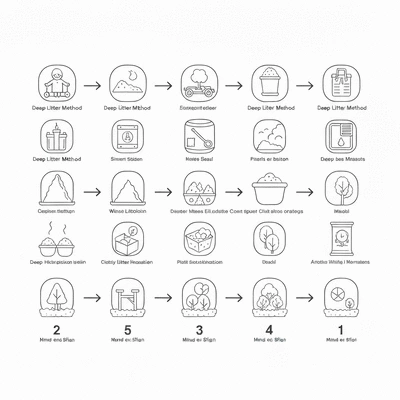
This visual outlines the Deep Litter Method's process flow and compares common bedding materials, highlighting key considerations for successful implementation. For more detailed insights into selecting the best options, check out our guide on bedding materials for chicken coops.
Essential for effective decomposition in composting.
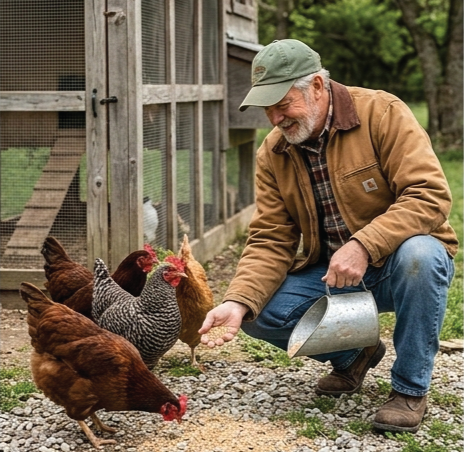
As a lifelong backyard chicken keeper, I’ve always looked for ways to keep my feathered friends happy and healthy while also making my life a bit easier. That’s where the Deep Litter Method comes into play! This technique not only simplifies bedding maintenance but also provides a natural way to enrich the soil in your yard. Let’s dive into what this method is all about!
The Deep Litter Method involves layering chicken bedding materials, allowing them to break down over time. Instead of constantly replacing bedding, this method lets waste and bedding naturally compost, creating a rich organic material that nurtures your garden. It’s a win-win for both your chickens and your garden!
By using the Deep Litter Method, you can create a more functional and sustainable environment for your flock while also boosting your garden’s productivity. Trust me, it’s a practical approach that’ll save you both time and effort!
At its core, the Deep Litter Method relies on the natural decomposition processes of organic materials. As your chickens live and lay eggs, they produce droppings that mix with the bedding. Over time, this mixture decomposes through the action of microorganisms, breaking down waste and creating compost right in your coop. This means less work for you and a healthier environment for your chickens!
Here’s how the process unfolds:
It's fascinating to see how nature works, and I can assure you that your backyard will thrive with this method! For tips on maintaining a healthy environment, explore our article on improving chicken coop air quality.
Not all bedding is created equal! Choosing the right materials is crucial for the success of the Deep Litter Method. Let’s explore the essential components you should consider when selecting bedding options for your chicken coop.
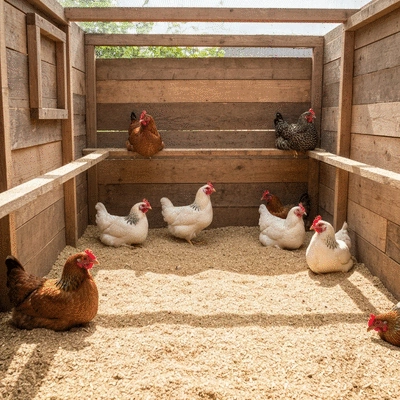
When it comes to bedding, you’ll want to pick materials that promote aeration and help with odor control. Some popular choices include:
These materials not only provide comfort for your chickens but also decompose effectively, making them ideal for the Deep Litter Method.
In the world of composting, maintaining a proper carbon-to-nitrogen ratio is essential. This balance helps to ensure effective decomposition. Aim for a ratio of about 30:1, which means for every one part nitrogen (chicken manure), you should have about 30 parts carbon (bedding materials).
When you balance these components properly, you’ll notice that the process works much more efficiently, leading to healthier conditions for your chickens and enriching compost for your garden.
Let’s quickly compare some of the most popular bedding materials you might use in the Deep Litter Method:
| Material | Pros | Cons |
|---|---|---|
| Straw | Good insulation, absorbs moisture | Can harbor pests if not managed |
| Wood Shavings | Excellent odor control, easy to handle | Can be dusty, may require more frequent replacement |
| Hay | Affordable, provides warmth | Can mold quickly if damp |
Choosing the right bedding is critical to the success of your Deep Litter Method. By understanding the strengths and weaknesses of each material, you can create the best environment for your chickens!
Did you know? Regularly turning your deep litter can significantly speed up the composting process. Use a pitchfork or shovel to mix the bedding and droppings every few weeks. This aeration helps maintain a healthy environment, reduces odors, and accelerates the breakdown of materials into nutrient-rich compost!
The Deep Litter Method is a chicken coop management technique where bedding materials and chicken waste are layered and allowed to decompose naturally within the coop, creating nutrient-rich compost over time instead of frequent cleaning.
One of the main benefits is reduced cleaning frequency. Instead of daily or weekly cleanouts, the deep litter is typically turned every few weeks, and the full compost is harvested seasonally or annually.
Ideal materials include straw, wood shavings, and hay. These provide good absorption, aeration, and carbon for effective decomposition.
A ratio of approximately 30 parts carbon (bedding materials) to 1 part nitrogen (chicken manure) is optimal for efficient decomposition and odor control.
Benefits include low maintenance, natural composting, healthier living conditions for chickens, and the production of nutrient-rich compost for gardening.
Potential challenges include ammonia buildup if not managed properly, which requires vigilance in aeration and maintaining the carbon-to-nitrogen balance.
As we wrap up our discussion on the Deep Litter Method, it's essential to evaluate both the benefits and drawbacks. This method can be incredibly rewarding for chicken keepers, offering a variety of advantages that align well with sustainable farming practices. However, like any system, it comes with its own set of challenges, and understanding these can help you make informed decisions for your flock.
When considering the Deep Litter Method, let's weigh the pros and cons:
By focusing on the benefits, such as enriching your soil through composting, you can appreciate the long-term advantages of the Deep Litter Method. However, it's crucial to stay vigilant about the challenges to ensure a successful setup.
To maximize your experience with the Deep Litter Method, I recommend following these final tips:
Remember, the key is to maintain balance in your coop's ecosystem! With a bit of attention and care, your deep litter can thrive, turning waste into a valuable resource. For specific guidance on managing potential issues, consider our article on managing ammonia in chicken coops.
One of the significant benefits of the Deep Litter Method is its cost-effectiveness. By recycling waste into nutrient-rich compost, you not only reduce the need for store-bought fertilizers but also promote a healthier environment for your chickens. This method is especially advantageous for hobbyists and homesteaders who are looking to implement sustainable practices without breaking the bank.
Plus, by minimizing waste, you're contributing to a more sustainable farming ecosystem. The less waste you have, the more you can invest in your chickens' health and well-being. And that’s a win-win in my book!
As we explore the Deep Litter Method, I’d love to hear from you! What has been your experience with this approach? Have you faced any challenges or enjoyed success? Sharing your stories helps build our community and empowers fellow chicken keepers!
Engaging with each other can lead to new insights and techniques. I encourage you to leave comments or questions about your own experiences with the Deep Litter Method. Your feedback can be invaluable to newcomers or those considering a switch!
For those eager to learn more about sustainable chicken keeping, there are plenty of resources available. I suggest checking out websites dedicated to organic farming practices, as they often provide tips and tricks that can help enhance your chicken-keeping journey.
These resources can provide a wealth of information and support as you embark on your journey with the Deep Litter Method. Remember, I’m here to help you every step of the way at American Chicken Coops!
Here is a quick recap of the important points discussed in the article:
Passionate chicken keeper. Homesteading enthusiast. Advocate for sustainable living.
Harold 'Hank' Dawson is dedicated to helping U.S. backyard chicken keepers create safe and practical housing solutions, empowering beginners, homesteaders, and suburban homeowners to embrace a joyful chicken-keeping lifestyle. Join her on American Chicken Coops for reliable resources and tailored strategies that simplify your coop building and maintenance and enhance your flock's well-being.
Passionate chicken keeper. Homesteading enthusiast. Advocate for sustainable living.
Harold 'Hank' Dawson is dedicated to transforming backyards across the U.S. into thriving, safe havens for chickens, empowering fellow chicken enthusiasts to embrace a sustainable and rewarding poultry-keeping lifestyle. Join her on American Chicken Coops for daily tips and tailored strategies that simplify your coop building and maintenance and enhance the well-being of your flock.